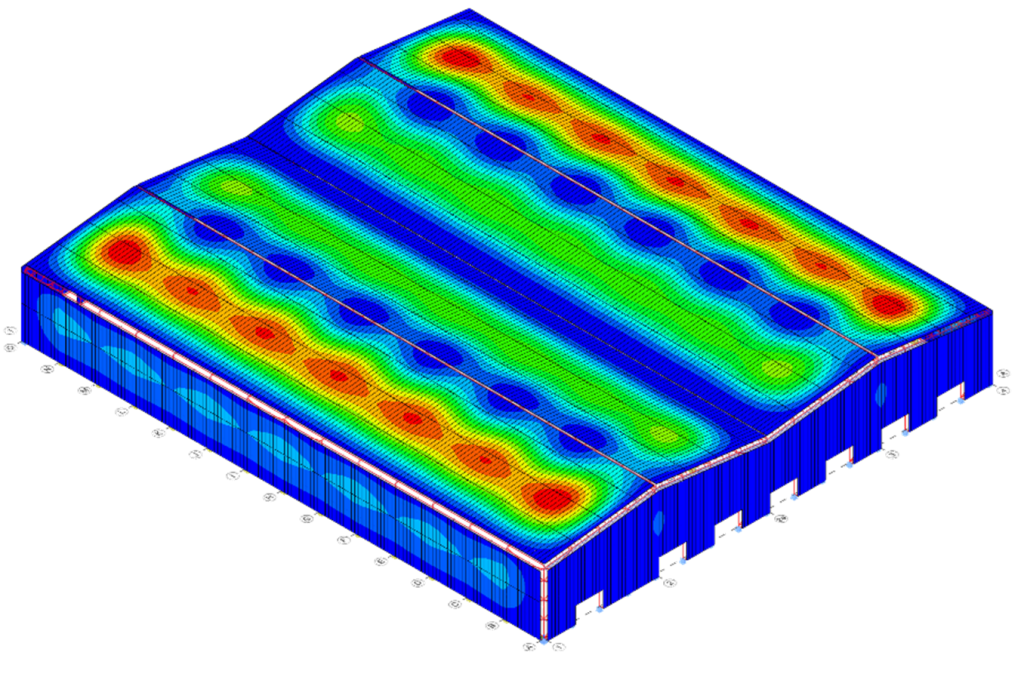
As initially conceived, SCIT’s software was intended for the accurate analysis of any clad single storey steel structure of any size right down to the individual cladding panels, fasteners and cleats.
Structural analysis is, of course, an essential prelude to design and SCIT’s programme of research and development recognises this. So, we can not only carry out an accurate 3D, non-linear analysis of many clad steel structures, right down to the individual fasteners, cleats and cladding panels, we can also assist you with the attendant structural design.
Built on the foundation of decades of research
Our software has been developed to the highest commercial standards and takes advantage of research published in the last few years. The central elastic-plastic analysis engine is based on the same one used to design hundreds of portal frames in the UK, but our enhancements allow us to analyse much larger structures in 3D including detailed consideration of the cladding.
The information you need, fast!
For large structures there are likely to hundreds of thousands of elements, each with numerous results. Our advanced post processors automatically extract the information most important to designers, rapidly calculating the SLS and ULS of the complete structure. We provide these critical outputs in an easy to read form.
Although the majority of clad steel structures in which ‘structure cladding interaction’ (SCI) plays a significant role are single storey, SCIT’s software is general and can usually be extended to include two or more storeys, if required.
However, it should be appreciated that software of this nature has other applications that go beyond the original intentions and, as the research has progressed, other practical applications have suggested themselves. Some of these will be discussed in the later paragraphs of this web site.
CASE STUDY – A SMALL CLAD SHED TESTED UNDER HORIZONTAL LOAD
“Both the calculated and measured deflections of the unclad structure are completely fictitious for the clad structure and this conclusively demonstrates that the load paths through the clad structure are quite different from those for the bare frames as conventionally designed. The clad structure did not act as a series of individual frames but rather as a complete three-dimensional entity and approximately 90% of the horizontal load was resisted by the clad gable frames with the remaining 10% being resisted by the internal frames“
What can we analyse and design?
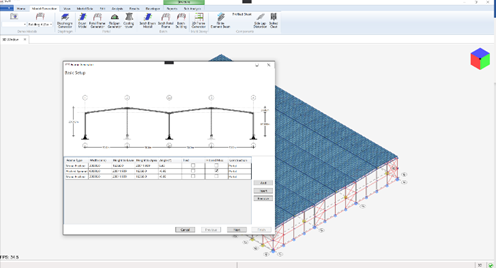
SCIT can rapidly construct and analyse detailed 3D finite element models all of the common forms of single storey steel framed structures:
What do you receive?
Using the results from our state of the art models, we can provide detailed numerical reports and diagnostics. These provide a valuable insight into the true behaviour of your clad structure.
The Serviceability Limit State of your structure is likely to be defined by failures of the cladding, or the interface between the cladding and the structure – we can show you where cladding is most liable to fail, and provide advice and guidance on how designs might be modified to improve performance and reduce the likelihood of premature failure .