
What is stressed skin design?
Stressed skin design has a very long history. It was first conceived in the context of the small portal framed structures of some 50 years ago, clad with a single skin of profiled metal sheeting. It was (correctly) discovered that that the cladding could help the frames to carry the applied loads thus saving material in the frames. After many years of patient investigation, including numerous tests as well as detailed calculations, it became apparent that, in practical terms, this intention was optimistic. For sure, under side (wind) load, the cladding could share a significant proportion of the load, but this load case was rarely critical, whereas, under vertical load, with frames with a roof pitch of 5 or 6 degrees, the contribution of the cladding was rarely significant. For this reason, all meaningful research came to a halt.
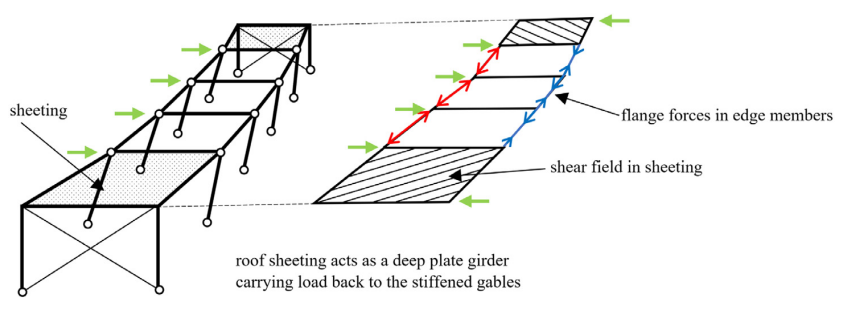
Nevertheless, a single case continues to this day to find practical application. In the large flat or quasi-flat roofs of large warehouses etc., stressed skin action can utilise the high in-plane stiffness of many cladding systems to remove the need for any bracing in the plane of the roof. As shown diagrammatically, outer edge members resist the bending forces (akin to the flanges of a beam) while the cladding resists the in-plane shear forces acting like the web of the ‘beam’..
Enabling clauses for stressed skin design are given in the latest version of Eurocode 3; BS EN 1993-1-3 (2006). However, this should be used with care as, for the detailed procedures, it references the “European Recommendations for the application of metal sheeting acting as a diaphragm, which have not been updated since thy were first published in 1995.
SCIT is able to offer you assistance in this context as its practical expertise in stressed skin design dates back to the origins of this topic.
WHY USE STRESSED SKIN DESIGN?
“Metal roof decks are used in many residential, school and office buildings. Stressed skin diaphragm design, which makes it possible for the roof to be constructed without bracing, has become an accepted practice in many countries, e.g. the UK, Australia, Canada, France, Germany and Sweden. For structural and economic reasons, bracing of flat roofs is undesirable, and diaphragm design has become the most attractive solution to this problem. Significant savings in material and labour can be achieved.”
Höglund (2002) – Stabilisation by stressed skin diaphragm design
Case studies
Thousands of buildings have been constructed utilizing stressed skin design – a few notable systems and examples are shown below.
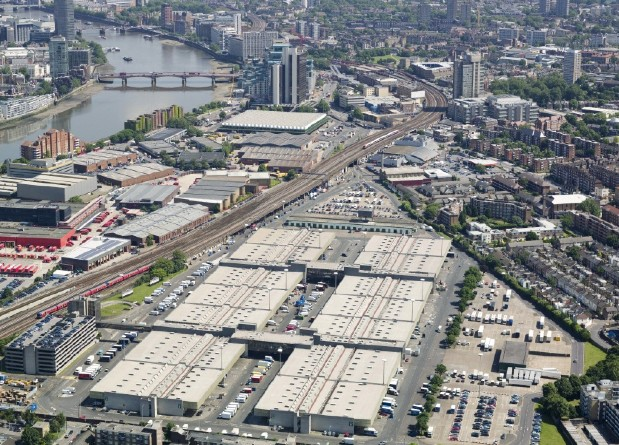
Fruit and vegetable building, New Covent Garden, London, UK
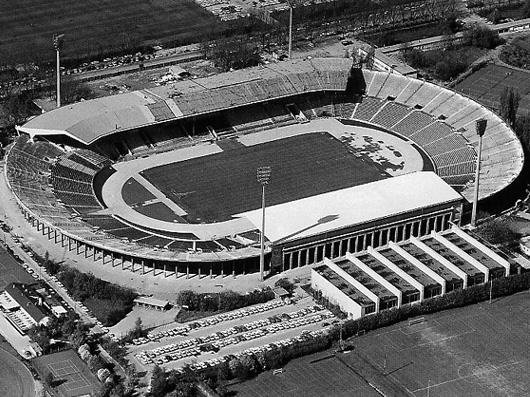
Neckarstadion, Stuttgart, Germany
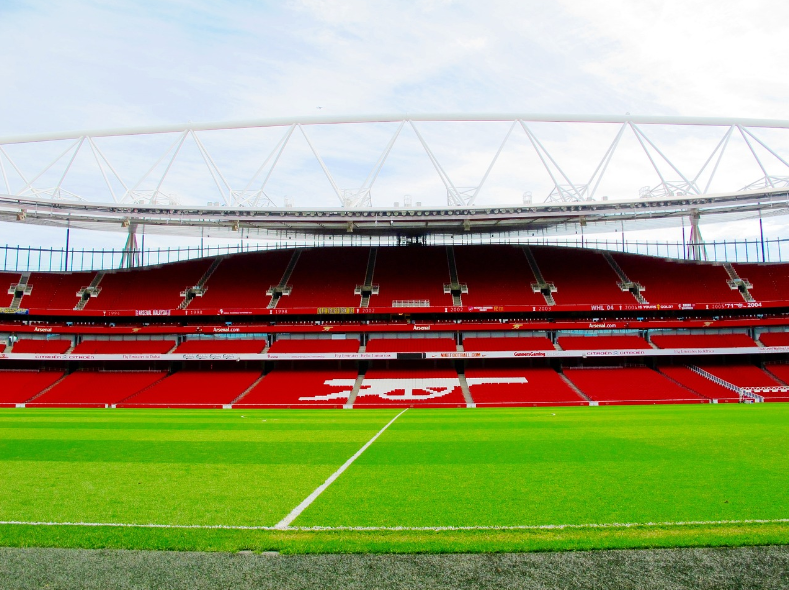
Emirates Stadium, London, UK
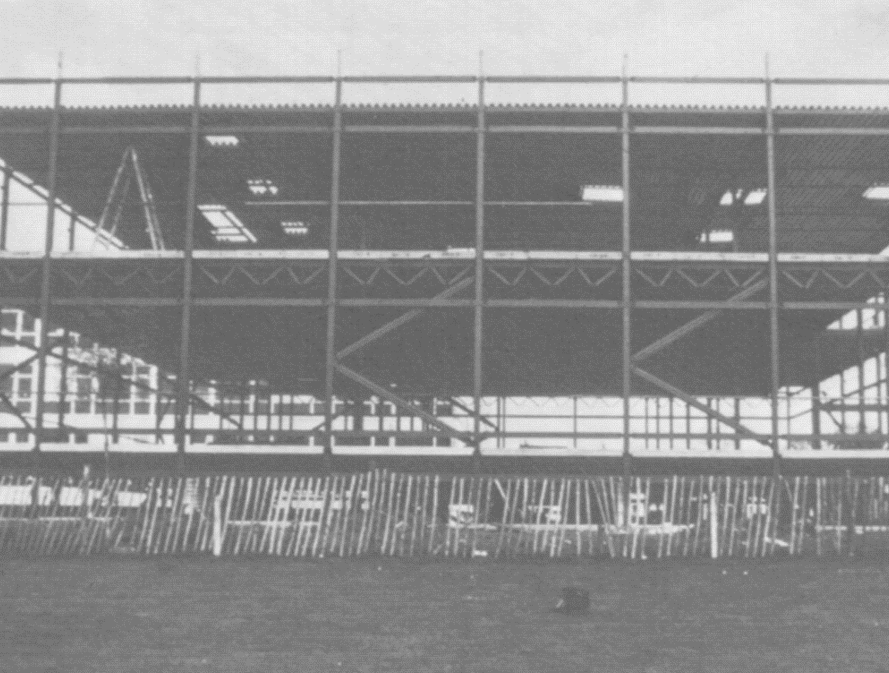
CLASP System, 1000+ buildings, UK
How can SCIT help you?
As well as being instrumental in the development of Stressed Skin Theory, the SCIT team have designed numerous buildings using stressed skin theory over the years. Our knowledge, experience and specialist software allows us to quickly analyse your structure and provide you with the cladding specification to maximise efficiency and ensure the structure is safe throughout its working life. We also offer support and guidance throughout the life of the project.